
If you are tired of replacing dead lead-acid batteries every two years, you are not alone. Whether you are powering a travel trailer, a solar off-grid shed, a fishing boat, or a backup sump pump, your battery is the heart of your system. But choosing the wrong one leads to frustration, hidden costs, and unexpected shutdowns.
That is where DC House enters the picture. Unlike generic Amazon sellers, DC House specializes exclusively in deep cycle LiFePO4 (Lithium Iron Phosphate) batteries—engineered for safety, longevity, and real-world use.
In this blog, we will explore what makes DC House different, why LiFePO4 chemistry beats lead-acid in every measurable way, and how to pick the perfect model for your needs.
Why Switch from Lead-Acid to LiFePO4? (The Short Answer)
Before we dive into DC House’s specific lineup, let us address the single most common question: “Can I replace lead-acid batteries with lithium batteries?”
Yes. Absolutely. But not all lithium batteries are created equal.
Here is what you gain by switching to a DC House LiFePO4 battery:
- 80% lighter weight – A 100Ah LiFePO4 weighs ~24 lbs vs. 60+ lbs for lead-acid.
- 10+ years of service – 4000–15000 cycles vs. 200–500 cycles for lead-acid.
- 100% usable capacity – Lead-acid should not be discharged below 50%. LiFePO4 can safely discharge 100%.
- No maintenance – No watering, no terminal corrosion, no venting.
- Flat voltage curve – Your devices run consistently until the battery is nearly empty.
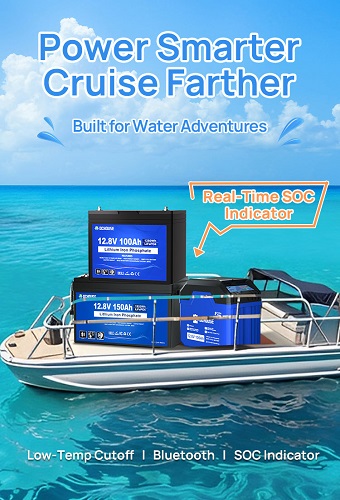
But there are two critical features you should never compromise on: low temperature protection and a good Battery Management System (BMS) . This is where DC House excels.
Deep Dive: DC House Best-Selling Batteries
DC House does not try to be everything to everyone. Instead, they focus on drop-in replacement deep cycle batteries for RVs, marine, solar, and off-grid power. All their models include a built-in BMS with short circuit, overcharge, over-discharge, and temperature protection.
Let us look at their most popular units.
1. 12V 100Ah LiFePO4 (Bluetooth & Low Temp Protection) – $189.99
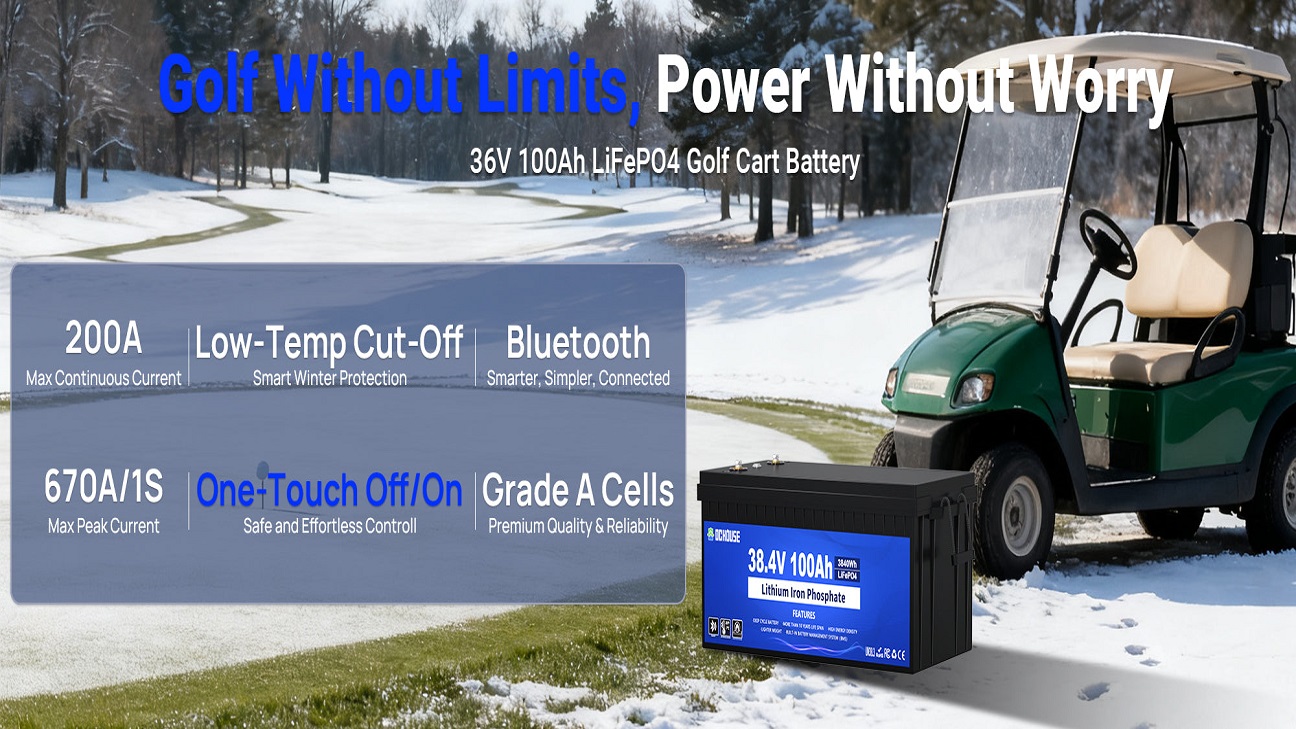
This is the sweet spot for most users. Whether for a trolling motor, golf cart, or small solar system, this battery offers:
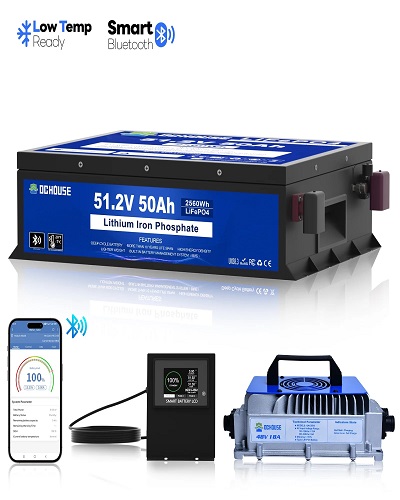
- Bluetooth monitoring – Check state of charge (SOC) and cell balance from your phone.
- Low temperature cut-off – Below 32°F (0°C), the BMS prevents charging, protecting the cells from irreversible damage.
- Drop-in ready – Same group size as a Group 31 lead-acid battery.
Best for: Weekend campers, kayak motor batteries, and small off-grid cabins.
2. 12V 165Ah Deep Cycle LiFePO4 Bluetooth – **299.99)
At this price per amp-hour, it is hard to find a better value. The 165Ah model delivers over 2 kWh of usable energy. Pair two in parallel for a 330Ah bank.
- Longer runtime – Perfect for CPAP machines overnight or running a 12V fridge for three days.
- Metal casing – Better heat dissipation and crush resistance.
Best for: Full-time van lifers, large trolling motors (80–112 lb thrust), and solar backup for freezers.
3. 12V 50Ah 2.0 Portable Bluetooth – **179.99)
Do not underestimate the small form factor. This 50Ah battery includes a built-in handle and weighs less than 15 lbs. It also features a DC port for direct connection to accessories.
- Truly portable – Take it from your boat to your hunting blind.
- Low temp cut-off – essential for winter camping or unheated garages.
Best for: Portable power stations, kayak fish finders, and electric fence energizers.
4. 12V 30Ah LiFePO4 with DC Port – **109.99)
An entry-level, ultra-compact battery for light-duty applications. It includes low temperature cut-off and a standard DC 5.5mm port—no adapter needed.
- Replace 35Ah AGM – Same footprint, half the weight, double the usable capacity.
- Terminal covers included – Safer for tight compartments.
Best for: Alarm systems, gate openers, UPS backup, and robotics.
The Hidden Value: Bluetooth and SOC Indicators
One of the most frustrating things about traditional batteries is not knowing how much energy remains. DC House solves this in two ways:
- Bluetooth models – Connect via your phone to see exact percentage, voltage, temperature, and historical cycles. No external shunt required.
- LED SOC indicators – On certain models (like the 12V 150Ah and 100Ah 3.0), a simple button press shows remaining capacity: 25%–100% at a glance.
This transparency builds trust. You will never be stranded with a dead battery because the app or gauge warns you in advance.
Real-World Performance: Low Temperature Charging
Here is a hard truth: Most cheap lithium batteries lack low temperature protection. If you try to charge them below freezing (common in an unheated RV or garage in winter), the internal plates can permanently plate with lithium metal, causing a short or fire.
DC House makes low temp cut-off standard on all their deep cycle models. When temperature drops below 32°F, the BMS simply disables charging. It will still discharge (power your loads), so your fridge or lights keep working. Once it warms above 40°F, charging resumes automatically.
For cold climates, this is a non-negotiable safety feature.
How DC House Compares to Other Brands
| Feature | DC House | Generic LiFePO4 | Lead-Acid |
|---|---|---|---|
| Low temp protection | Yes (standard) | Rare | N/A |
| Bluetooth monitoring | On many models | Never | No |
| Cycle life | 4000+ | 1000–2000 (unverified) | 300 |
| Weight (100Ah) | ~24 lbs | ~26 lbs | 60+ lbs |
| Customer support | Lifetime email support | None or chatbot | Store-dependent |
DC House is not the cheapest, but they are far from overpriced. Given the 5-year warranty and real BMS safety, their value is excellent.
Who Should Buy from DC House?
Ideal for:
- RV owners – Replace heavy, weak lead-acid with lithium that charges faster from solar or alternator.
- Off-grid solar – Maximize every watt from your panels. LiFePO4 charges efficiently at partial state of charge.
- Marine (trolling motors) – Save 40+ lbs on your transom. Better weight distribution.
- Emergency backup – Sump pumps, medical devices, and communications gear.
Not ideal for:
- Engine starting batteries – LiFePO4 does not provide high cold cranking amps (CCA). Use a dedicated starter battery for your truck.
- Extreme cold operation – Below -4°F (-20°C), internal resistance rises. Store batteries indoors when possible.
About the author: *Energy storage specialist with 10+ years in off-grid and marine electrical systems. No affiliate relationship with DC House—just an honest evaluation of quality batteries.*
FAQ
Can I connect DC House batteries in series for 24V or 48V?
Yes, but only on specific models. Check the manual first. Most 12V batteries can be series-connected up to 48V if they have balanced BMS.
Do I need a special charger for LiFePO4?
No—any good “lead-acid” charger with a Lithium or AGM profile works. Avoid old “desulfation” modes. DC House recommends 14.2V–14.6V absorption.
How long does shipping take?
DC House shows “Fast, Free Shipping” – typically 3–7 business days in the continental US.
USING THIS CODE & GET 2% OFF ON SITEWIDE:
Final Verdict: Trustworthy and Transparent
After reviewing dozens of lithium battery brands, DC House stands out for three reasons:
- They tell you exactly what is inside – Low temp protection, Bluetooth, BMS specs are clearly listed.
- They offer real warranties – Up to 5 years, not a vague “1-year limited.”
- Their website is simple and direct – No fake reviews, no inflated “was” prices without real discounts.
If you are ready to make the switch, start with their 12V 100Ah Bluetooth model—it is the perfect balance of price, features, and peace of mind.
Visit DC House directly: www.dchousepower.com


Leave feedback about this