
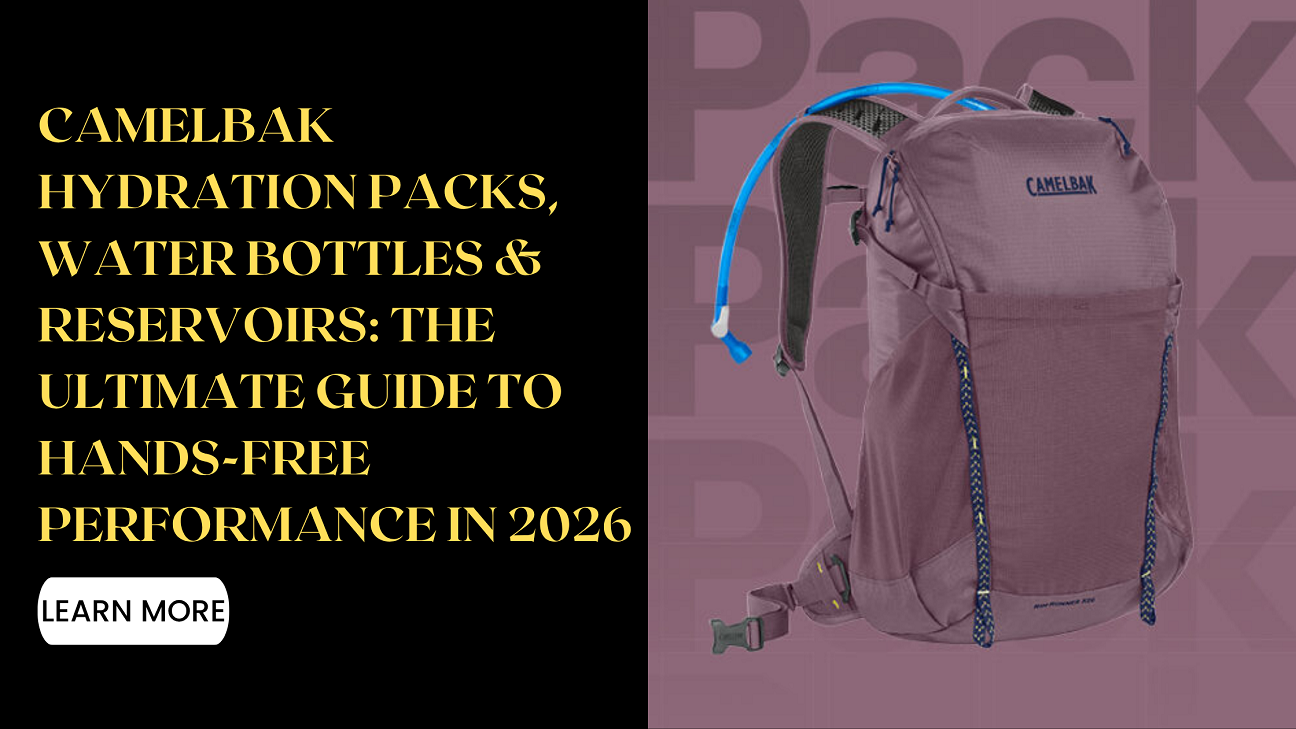
Have you ever been mid-trail, gasping, fumbling with a water bottle while your pack shifts and your focus vanishes? That exact frustration is why a Texas EMT stuffed an IV bag into a tube sock in 1989—and accidentally invented the modern hydration industry. Today, CamelBak remains the name that defined hands-free hydration. Whether you’re hunting for a CamelBak water bottle, CamelBak backpack, CamelBak hydration pack, CamelBak Mule, CamelBak Eddy, CamelBak Podium, or a reliable CamelBak bladder, this guide breaks down everything you need to know to choose the right gear and actually use it better.
From dusty desert races to mountain bike descents, trail runs, hikes, and even tactical missions, CamelBak products keep people moving without breaking stride. This isn’t just another product roundup. It’s the story of how one clever idea became the gold standard, what makes the current lineup different, and how to pick the exact system that matches your adventure.
The Origin Story That Changed Outdoor Gear Forever
In the scorching heat of the Hotter’n Hell 100 bike race in Wichita Falls, Texas, emergency medical technician Michael Eidson needed a better way to drink without stopping. He filled a medical IV bag with water, slipped it into a tube sock, tucked it into his jersey, and ran a tube over his shoulder secured with a clothespin. Hands-free hydration was born.
That makeshift prototype evolved into the ThermoBak. By the early 1990s, mountain bikers were adopting it in droves. The iconic M.U.L.E. (Multi-Use Lightweight Equipment) pack arrived in 1996 and became the silhouette still recognizable today. CamelBak expanded into military contracts, reusable bottles (the Eddy line), and high-flow bike bottles (Podium series). The company later became part of Vista Outdoor (now under Revelyst) while keeping its Petaluma, California roots and relentless focus on real-world performance.
The “Got Your Bak” lifetime guarantee on manufacturing defects remains a powerful signal of confidence in the gear.
Why CamelBak Still Dominates Hands-Free Hydration
CamelBak didn’t just invent the category—it kept improving the details that matter when you’re exhausted and thirsty.
Crux Reservoir Technology The current Crux reservoir (available in 1.5L, 2L, and 3L) delivers roughly 20% more water per sip than earlier designs through wider tubing and a refined 45-degree valve angle. It features a large fill port with ergonomic handle, an on/off lever near the bite valve, Quick Link disconnect for easy filling and cleaning, HydroGuard antimicrobial treatment, and the self-sealing Big Bite Valve. Lumbar versions shift weight lower for better stability on technical terrain. Mil-spec versions serve military and tactical users.
Big Bite Valve Bite, sip, release. It seals itself and resists leaks better than many competitors. Cleaning is straightforward once you know the routine.
Pack Design Philosophy CamelBak prioritizes low-profile, stable carry with good ventilation. Models range from minimalist running vests and belts to fully featured mountain bike and hiking packs. Many include magnetic tube traps, impact protection options, and thoughtful organization without unnecessary bulk.
CamelBak Product Lines Explained: Packs, Bottles & Reservoirs
Hydration Packs & Vests
- M.U.L.E. series (including Mule 12, Mule Pro 14): The workhorse for mountain biking and day hikes. Balanced capacity, stable fit, and reliable Crux reservoirs.
- Hydrobak / Hydrobak Light: Ultra-minimalist options for short rides or runs when every gram counts.
- Arete, Rim Runner, Octane, Powderhound, Cloud Walker: Hiking and trail-focused packs with varying storage and water capacity.
- Chase, Circuit, Ultra Pro, Zephyr, Nano, Rogue Light: Running and trail-running vests designed for bounce-free movement and quick access.
- Tactical / Mil-spec lines (Motherlode, HAWG, Ambush, Thermobak, BFM): Built tougher for demanding professional use.
- Waist packs and belts (Repack LR, Ultra Belt, Podium Flow Belt, Stash Belt): Lower center of gravity for runners and cyclists who prefer not to wear a full pack.
Water Bottles
- Eddy+ / Eddy: Everyday bottles with the classic bite valve. Available in Tritan, insulated, and stainless options. Easy to drink from while walking or driving.
- Chute Mag: Popular for its magnetic cap that stays out of the way. Available in plastic and insulated stainless steel (excellent temperature retention).
- Podium / Podium Chill / Podium Ice / Dirt Series: The cyclist’s favorite. High-flow Jet Valve, self-sealing, easy to squeeze one-handed while riding. Chill versions keep water colder longer.
- Forge Flow, MultiBev, Hot Cap: Specialized options for different drinking preferences and temperatures.
- Stainless steel and insulated lines: For people who want cold drinks all day without the plastic taste.
Reservoirs & Accessories
Standalone Crux and legacy Antidote reservoirs, insulated tubes, filters (including Lifestraw collaborations), cleaning kits, and conversion accessories keep older packs relevant.
How to Choose the Right CamelBak for Your Activity
Mountain Biking / Trail Riding Look at the Mule series, Hydrobak, or packs with impact protection. Prioritize stability, low profile, and easy hose routing.
Hiking & Day Packs Arete, Rim Runner, Octane, or larger Mule/Fourteener-style options. Balance water capacity (usually 1.5–3L) with gear storage.
Trail Running & Road Running Vests (Chase, Circuit, Ultra Pro, Zephyr) or waist belts. Fit is everything—try for zero bounce and easy access pockets.
Everyday / Commute / Gym Eddy+, Chute Mag, or insulated stainless bottles. Convenience and leak resistance matter most.
Kids or Small Loads Mini Mule and smaller Eddy options.
Key Decision Factors
- Water capacity needed for your typical outing
- Storage volume beyond the reservoir
- Weight and fit (try on if possible)
- Insulation needs
- Cleaning preference (wide-mouth reservoirs win)
- Activity-specific features (magnetic tube traps, protectors, lumbar design)
Real-World Benefits and Hidden Advantages
Hands-free drinking means you stay in the moment—eyes on the trail, hands on the bars or poles. Consistent small sips improve performance more than infrequent big gulps. Military adoption proved the concept under extreme stress; outdoor athletes simply refined the lifestyle version.
Many users report fewer stops, better pacing, and the simple joy of cold water on a hot climb. The lifetime guarantee and widespread availability of replacement parts (bite valves, tubes, reservoirs) make CamelBak a long-term investment rather than disposable gear.
CamelBak vs. Popular Alternatives
Osprey often wins on overall pack comfort, ventilation, and organizational features for pure hiking. Salomon and Nathan excel in pure running vests. HydraPak and Platypus make excellent reservoirs. Yet CamelBak frequently leads in pure hydration performance—the flow rate, bite valve reliability, and the seamless integration of reservoir into pack. Many serious users run a CamelBak reservoir inside an Osprey or other pack, or simply stick with the brand that invented the system.
The “best” choice depends on whether hydration is your primary need or secondary to pack volume and fit.
Key Insights & Important Takeaways
- CamelBak invented and still leads the hands-free hydration category more than 35 years later.
- The Crux reservoir’s higher flow rate and practical features (on/off lever, Quick Link, large opening) are meaningful upgrades.
- Match the product to the activity: Mule for bikes, vests for running, Chute Mag or Eddy+ for daily life, Podium for cycling bottles.
- Proper cleaning and drying prevent most reservoir issues.
- Fit and stability matter as much as capacity—try before you buy when possible.
- The lifetime guarantee and accessory ecosystem add long-term value.
- Insulated options (Podium Chill, insulated bottles and tubes) make a noticeable difference in extreme temperatures.
Frequently Asked Questions
What is the best CamelBak hydration pack for hiking? Models like the Arete, Rim Runner, Octane, or Mule series balance water capacity and storage well for day hikes. Choose based on how much gear you carry.
How do I clean a CamelBak bladder / reservoir? Empty it, rinse thoroughly, use a mild soap or specialized cleaner with a brush kit, rinse again, and dry completely with the reservoir held open (drying arms or inverted). Avoid leaving it sealed wet.
Is the CamelBak Crux better than older reservoirs? Yes for most users—higher flow, easier fill/clean, better on/off control, and improved materials.
What’s the difference between CamelBak Eddy and Chute Mag? Eddy uses a classic bite valve and straw. Chute Mag has a larger opening and magnetic lid that flips out of the way—preferred by many for everyday and outdoor use.
Can I use a CamelBak reservoir in another brand’s backpack? Often yes, especially with standard sizes. Check dimensions and hanging points.
Are CamelBak bottles dishwasher safe? Many Tritan bottles and some parts are top-rack safe; always check the specific model. Insulated stainless usually requires hand washing for best longevity.
What size CamelBak bladder do I need? 1.5L suits shorter efforts or minimalists. 2–3L is standard for most day activities. Match to your sweat rate and refill opportunities.
Does CamelBak offer women’s specific fits? Yes—several packs and vests have women’s versions with adjusted torso length, shoulder straps, and hip belts.
Where can I buy authentic CamelBak products? Official site (camelbak.com), major outdoor retailers (REI, etc.), and authorized online sellers. Watch for sales around Black Friday and seasonal clearances.
How long does a CamelBak reservoir last? With proper care, many last years. The lifetime guarantee covers manufacturing defects.
Final Thoughts: Stay Hydrated, Stay Moving
CamelBak turned a desperate race-day hack into an entire category of outdoor equipment that millions rely on. Whether you grab a simple CamelBak water bottle for the office, a CamelBak Eddy+ for daily adventures, a Podium Chill for the bike, or a full CamelBak Mule or running vest for the mountains, the goal is the same: remove friction between you and the water your body needs.
Choose the right capacity and fit, maintain the reservoir, and you’ll spend less time thinking about hydration and more time enjoying the trail, the descent, or the long climb. That’s the real promise Michael Eidson accidentally discovered with an IV bag and a tube sock—and the reason CamelBak still sets the standard today.





Leave feedback about this