
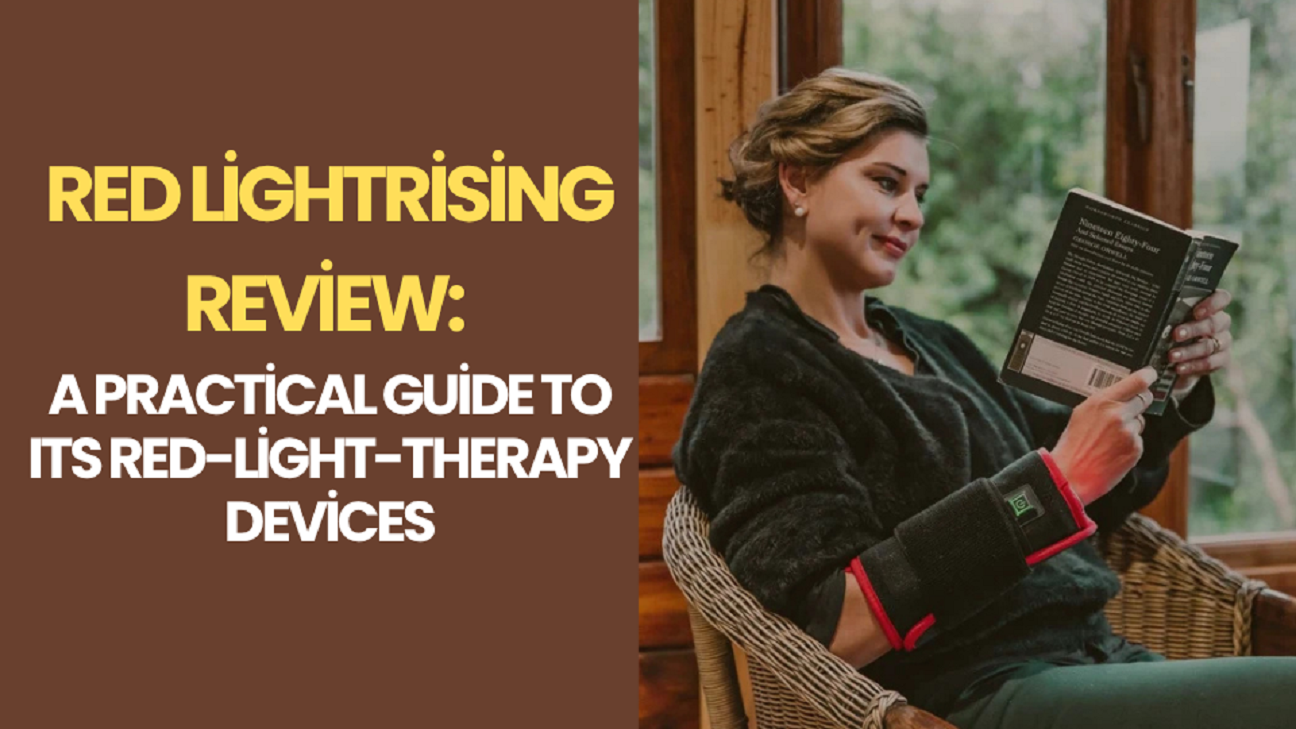
Red-light therapy has moved beyond specialist clinics and into homes, gyms and wellness routines. Yet choosing a device is not straightforward. Panel size, wavelengths, irradiance, treatment area, recommended distance and safety instructions can all influence how practical a product is.
Red Light Rising is a UK company selling red and near-infrared light devices for home use. Its range includes full-body and medium panels, handheld lights, wearable wraps, sleep-related lighting and accessories.
This guide explains what Red Light Rising offers, how its device types differ and what UK shoppers should consider before purchasing. It also examines the limitations of home photobiomodulation so readers can make a balanced decision rather than relying on broad wellness promises.
What Is Red Light Rising?
Red Light Rising is a UK-based red-light-therapy brand established in 2017. The company sells devices to customers in the UK and other international markets, with its UK storefront displaying prices in pounds sterling.
Its current product categories include:
- Full-body red-light-therapy panels
- Medium-sized panels
- Targeted handheld devices
- Flexible wraps and belts
- Circadian and sleep lighting
- Blue-light-blocking glasses
- Panel stands and accessories
- Gift cards
The brand also provides educational material, comparison tools and a dosage calculator. According to its website, purchases include personal onboarding guidance, although buyers should check whether this applies to every item and region.
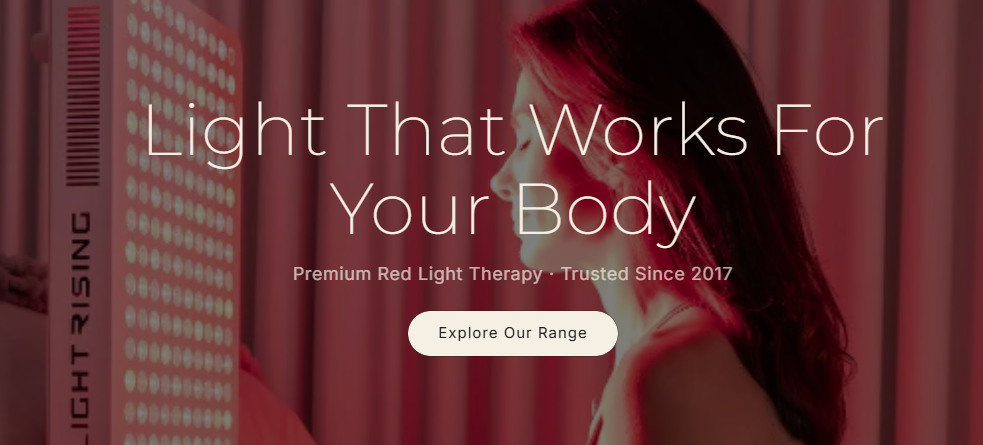
You can view the current product range through the Red Light Rising official website.
What Is Red-Light Therapy?
Red-light therapy is often called photobiomodulation, or PBM. It exposes the body to selected wavelengths of visible red or near-infrared light using LEDs or low-level lasers.
It should not be confused with:
- Ultraviolet tanning lamps
- Ordinary red household bulbs
- Infrared heat lamps
- Intense pulsed light treatments
- Photodynamic therapy involving a light-sensitive medicine
Although these technologies may all involve light, their wavelengths, power, purpose and safety requirements differ.
Researchers have investigated photobiomodulation for several clinical and wellness applications. However, evidence is not equally strong for every advertised use, device or treatment protocol. A finding from a supervised clinical system cannot automatically be applied to every consumer panel.
For example, the NHS and NICE discuss photobiomodulation in specific clinical contexts, including managing oral mucositis associated with cancer treatment. An NHS feasibility study has also explored whole-body PBM for widespread chronic pain, but its small scale means it should not be treated as definitive proof for consumer devices. Readers can review the NHS research summary for context.
Red Light Rising Devices Compared
| Device type | Coverage | Potentially suitable for | Main limitation |
|---|---|---|---|
| Full-body panel | Large area | People wanting broad, standing sessions | Higher cost and greater space requirements |
| Medium panel | Upper or lower body region | Home users balancing coverage and size | May require repositioning |
| Handheld light | Small, targeted area | Travel or focused application | Treating several areas takes longer |
| Wrap or belt | Localised area | Hands-free use around a suitable body region | Fit and positioning affect coverage |
| Circadian lighting | Room or evening lighting | Reducing exposure to bright conventional light at night | Not equivalent to a therapeutic panel |
Advantage Full Body Panel
The Advantage Full Body Red Light Therapy Panel is among the brand’s largest home devices. It is designed for broad exposure and may appeal to users who want to treat several body areas in one session.
A full-body panel can reduce the need to reposition a smaller device repeatedly. However, it also requires more floor or wall space, an appropriate stand or mounting arrangement, and a larger budget.
Before choosing a full-size panel, check:
- Product dimensions and weight
- Included mounting hardware
- Stand compatibility
- Published wavelengths
- Irradiance at specified distances
- Recommended treatment time and distance
- Electrical requirements
- Whether eye protection is included or advised
A larger panel is not automatically more appropriate. Someone interested in one small area may find a handheld device more convenient.
Half Stack Medium Panel
The Half Stack Medium Red Light Therapy Panel provides greater coverage than a handheld without requiring the space of a full-body system. It may suit people who want to focus on the back, legs, shoulders or another broader region.
Medium panels can provide a practical compromise between cost and coverage. The user may still need to rotate or reposition during a session, depending on the intended area.
Consider where the panel will be used and stored. A device that is difficult to position may be used less consistently, even if its technical specifications look impressive.
Target Light Handheld Devices
Red Light Rising sells several Target Light handheld models, including the Target Light 670 and newer multi-wavelength versions. Handheld lights are designed for smaller treatment areas and can be easier to store or carry.
Potential advantages include:
- Focused placement
- Lower space requirements
- Easier transport
- A lower entry price than many large panels
- Simple use on one selected area
The main tradeoff is limited coverage. Treating the back, both legs or multiple areas with a small device may take considerably longer than using a panel.
Models should not be compared by name alone. Check wavelength combinations, beam area, irradiance, controls, recommended distance and included accessories.
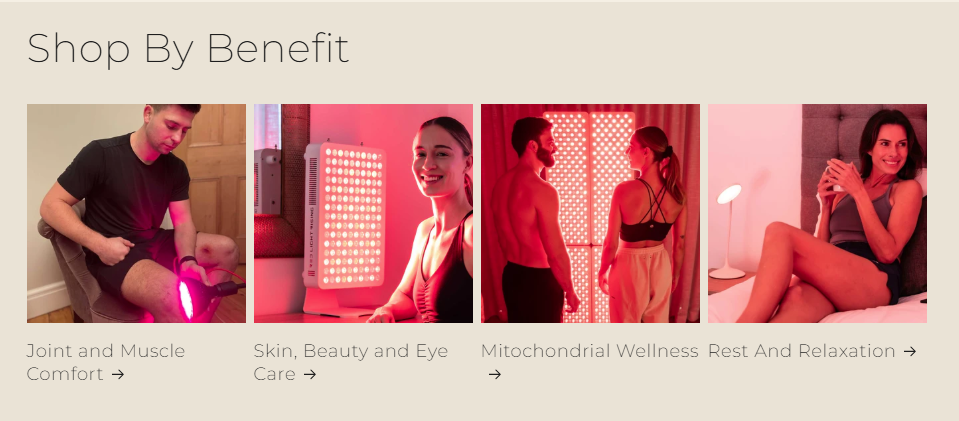
Advantage Red-Light-Therapy Wrap
A flexible wrap places LEDs close to the body and may allow more freedom than standing in front of a panel. It can be useful for a suitable joint, muscle group or body area when the product fits correctly.
A wearable design still has limitations. The light distribution, fit, heat, cable placement and ability to keep the device clean all affect usability. Avoid wrapping a device more tightly than instructed, and do not use it over broken or irritated skin unless a healthcare professional and the manufacturer say it is appropriate.
What to Look for Before Buying
Wavelengths
Red Light Rising states that its products use visible red wavelengths in approximately the 600-nanometre range and near-infrared wavelengths in the 800-nanometre range. Specific combinations vary by device.
Wavelength is only one specification. It does not establish that a device will deliver a particular health outcome.
Irradiance and dose
Irradiance describes power delivered over an area, commonly expressed in milliwatts per square centimetre. Dose also depends on exposure time and distance.
A higher figure is not necessarily better. Excessively intense or prolonged exposure may cause discomfort, redness or irritation. Follow the instructions for the exact product rather than copying another user’s routine.
Treatment area
Choose a device according to the area you realistically intend to expose:
- A handheld may suit one small area.
- A medium panel can cover a larger region.
- A full-body panel is designed for broader exposure.
- A wrap provides close, hands-free positioning.
Testing and documentation
Red Light Rising states that it measures its devices in-house and publishes results on individual product pages. It also says its handheld products undergo independent testing by the UK Lighting Industry Association.
Review the actual documentation where available. Look for clear specifications, electrical conformity information, usage instructions and contact details rather than relying only on badges or summary statements.
Practical setup
Consider the less exciting but important details:
- Where will the device be stored?
- Can it be positioned at the instructed distance?
- Is a stand included?
- Will another person be needed to mount it?
- Is the power cable long enough?
- Can the surface be cleaned safely?
- Is the light likely to disturb other people in the room?
Red-Light-Therapy Safety
Photobiomodulation is generally non-invasive, but safe use still requires care. NHS guidance for professionally delivered PBM notes that excessive intensity or exposure may cause temporary redness, soreness or a burning sensation. It also identifies eye exposure and photosensitivity as considerations in some treatment settings. Guy’s and St Thomas’ NHS Foundation Trust provides a useful clinical overview.
General precautions include:
- Follow the manufacturer’s distance and exposure instructions.
- Do not stare directly into bright LEDs.
- Use suitable eye protection when recommended.
- Stop if treatment causes pain, burning, marked redness or visual symptoms.
- Keep electrical devices away from water.
- Do not use damaged cables, plugs or LED housings.
- Ask a clinician before use if you take photosensitising medication.
- Seek advice if you are pregnant, have an active medical condition, use an implanted medical device or are receiving cancer treatment.
Do not expose a suspicious mole, unexplained swelling, untreated lesion or persistent painful area instead of seeking medical assessment.
Red-light therapy is also not sunscreen. It does not prevent ultraviolet damage or replace sun protection.
Red Light Rising Trial and Purchasing Considerations
Red Light Rising currently advertises a 365-day trial with refund eligibility if a customer is dissatisfied. The full policy may include conditions concerning product care, return authorisation, shipping costs, damage, accessories and the original packaging.
Before ordering, verify:
- Whether the selected product qualifies
- When the trial period starts
- Who pays return postage
- Whether restocking or collection fees apply
- Required packaging and condition
- Warranty length and exclusions
- Procedures for faulty or damaged products
Large panels can be expensive and costly to ship back. Read the current returns and trial policy rather than relying only on the promotional summary.
Frequently Asked Questions
Is Red Light Rising the same as the Red Rising book series?
No. Red Light Rising is a UK red-light-therapy company. Light Bringer: A Red Rising Novel is a science-fiction book by Pierce Brown and is unrelated to the wellness brand.
What products does Red Light Rising sell?
The company sells full-body and medium panels, handheld red-light devices, flexible wraps, sleep-related lighting, blue-light-blocking glasses, stands and accessories.
Is red-light therapy proven to work?
Evidence exists for certain forms of photobiomodulation in specific clinical contexts, but it does not prove that every home device works for every advertised goal. Outcomes depend on the condition, device and protocol.
Is red-light therapy safe for the eyes?
Bright LEDs should not be stared at directly. Eye-protection requirements differ by device and treatment. Follow the product instructions and seek professional advice if you have an eye condition or light sensitivity.
Where can I buy Red Light Rising products in the UK?
Products can be purchased through the official Red Light Rising website. Confirm the live price, delivery terms, trial conditions and device specifications before checkout.
Conclusion
Red Light Rising offers UK consumers several ways to explore home photobiomodulation, ranging from compact handheld lights to full-body panels. The best device depends on the treatment area, available space, budget and ability to follow a consistent, product-specific routine.
Red-light therapy has legitimate areas of scientific and clinical investigation, but evidence is not equally strong for every wellness claim. Treat the device as a consumer wellness product unless a qualified clinician recommends it for a defined medical purpose.
Compare published wavelengths and irradiance, examine the practical setup, read the safety instructions and understand the trial conditions. Visit the Red Light Rising official store to review current models and policies.




Leave feedback about this