
The right martial-arts uniform should support movement, withstand regular training, and comply with the rules of your gym or competition. A poorly fitted gi can feel restrictive, collect excess fabric during grappling, or shrink enough to become unusable.
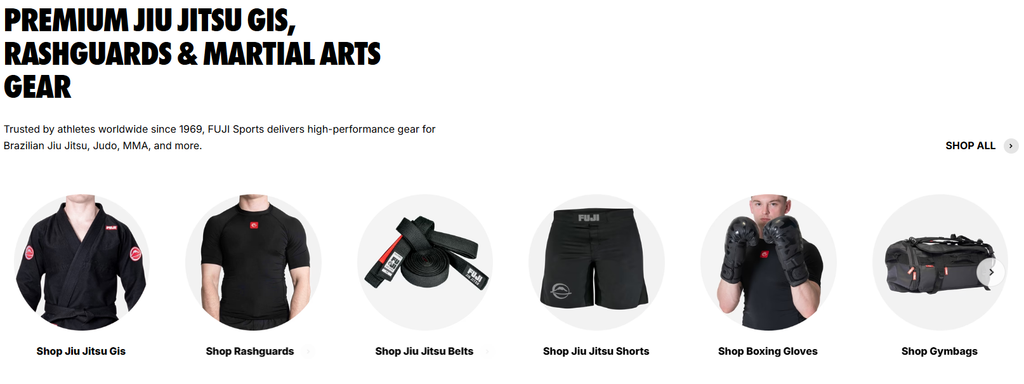
Fuji Sports offers uniforms and training gear for Brazilian Jiu-Jitsu, judo, karate, MMA, and other combat sports. Its collection includes beginner-friendly gis, lightweight competition models, belts, rashguards, grappling shorts, protective equipment, gym bags, and training accessories.
This guide compares the major Fuji BJJ gi families, explains how judo and BJJ uniforms differ, and helps USA shoppers choose suitable Fuji martial arts gear without relying on marketing claims alone.
What Is Fuji Sports?
Fuji Sports is a martial-arts equipment brand whose North American store carries products for men, women, and children. The company states that it has operated since 1969 and currently organizes its catalog around several disciplines:
- Brazilian Jiu-Jitsu
- Judo
- MMA and no-gi grappling
- Karate
- Boxing and striking
- Sambo
- General martial-arts training
The product range extends beyond uniforms. Shoppers can also find Fuji BJJ belts, judo belts, rashguards, shorts, gloves, shin guards, headgear, mouthguards, bags, sandals, finger tape, and mat-cleaning supplies.

You can explore the latest categories through the official Fuji Sports store.
Popular Fuji BJJ Gi Models Compared
Fuji offers several BJJ gi collections for different budgets and training preferences. The following comparison provides a general starting point; exact fabric weights and construction can vary between current versions.
| Fuji BJJ gi | Best suited to | Main consideration |
|---|---|---|
| Baseline 2.0 | Beginners and regular gym training | Confirm whether standard or slim fit suits your build |
| All Around BJJ Gi | Students wanting a traditional training gi | May feel heavier than a lightweight competition model |
| Suparaito BJJ Gi | Travelers and competitors prioritizing lower weight | Lighter fabric may feel different from a heavier training gi |
| Sekai series | Experienced athletes seeking a premium competition-oriented gi | Check current competition rules and the available Sekai version |
| Elemental BJJ Gi | General training and buyers comparing midrange options | Specifications may vary by release and size |
| Women’s and kids’ gis | Practitioners needing dedicated size patterns | Use the relevant chart rather than converting from men’s sizing |
Fuji Baseline 2.0 BJJ Gi
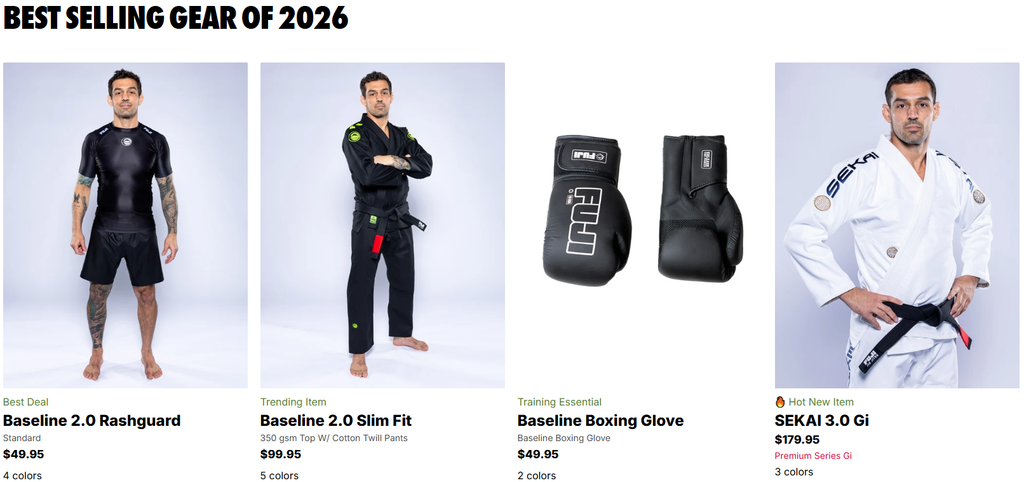
The Fuji Baseline BJJ Gi is positioned as an accessible option for students building their first training kit or adding another gi to their weekly rotation. The current Baseline 2.0 Slim Fit listing describes a 350 GSM jacket, cotton-twill pants, and a tapered cut.
A Fuji Baseline 2.0 BJJ Gi may suit someone who wants:
- A straightforward practice uniform
- A lighter jacket than some traditional gis
- Multiple color options
- A slim-fit pattern
- A relatively accessible entry into the Fuji BJJ range
Slim fit is not appropriate for every body type. A practitioner with broader shoulders, a larger chest, or thicker legs may prefer the standard pattern or another model. Compare your height and weight with the product-specific chart rather than selecting a size based only on a previous brand.
Fuji All Around BJJ Gi
The Fuji All Around BJJ Gi is one of the brand’s established training models. Fuji describes it as suitable for both practice and competition and highlights features such as a thick collar, reinforced stress areas, and durable jacket construction.
Its more traditional build may appeal to practitioners who prioritize everyday durability over obtaining the lightest possible competition uniform. However, a heavier gi can occupy more room in a gym bag, take longer to dry, and contribute more weight at a tournament weigh-in.
The All Around is worth considering for:
- Regular academy classes
- Beginners who want a conventional BJJ gi
- Practitioners who prefer a substantial jacket
- Students building a training rotation
Competition rules differ among organizations. Always ask the event organizer whether the selected color, patches, fit, and fabric comply with its current uniform standards.
Fuji Suparaito BJJ Gi
“Suparaito” refers to Fuji’s lightweight gi family. The Fuji Suparaito BJJ Gi is designed for practitioners who want to reduce the weight and bulk of their uniform.
A Fuji lightweight BJJ gi can be particularly useful when:
- Traveling with limited luggage space
- Training in a warm academy
- Attending tournaments with gi weigh-ins
- Carrying multiple uniforms to an event
- Preferring a less bulky training feel
Lightweight does not necessarily mean better for every athlete. Some students prefer the feel and grip resistance of a heavier jacket. Fabric weight is also only one part of total gi weight; pants, collar, reinforcements, patches, and size all contribute.
Searchers may also encounter the Fuji x BJJ Fanatics Suparaito Gi, which refers to a collaboration rather than every Suparaito model. Check the current product page to confirm whether a collaboration is still available.
Fuji Sekai BJJ Gi
The Sekai collection is generally presented as a premium, competition-oriented Fuji jiu-jitsu gi family. Shoppers searching for the Fuji Sekai 2.0 BJJ Gi may find older stock or historical listings, while the official USA store currently promotes a newer Sekai 3.0 Gi.
This distinction matters because specifications can change between generations. Do not assume that a Sekai 2.0 review describes the current model accurately.
Before purchasing any Sekai BJJ Gi, verify:
- The exact generation
- Jacket and pants materials
- Complete uniform weight
- Available cuts and sizes
- Current tournament compliance
- Whether the belt is included
- Return eligibility for sale merchandise
Fuji Judo Gis and How They Differ from BJJ Gis
Although judo and Brazilian Jiu-Jitsu both use jacket-and-pants uniforms, a Fuji judo gi should not automatically be treated as a substitute for a Fuji BJJ gi.
Judo uniforms typically have a roomier cut and construction suited to repeated throwing and gripping. BJJ gis often use a closer fit intended to reduce excess material during ground grappling. Competition organizations also maintain different uniform standards.
Fuji currently offers single-weave and double-weave judo options.
Single-weave judo gi
A Fuji single-weave judo gi may suit beginners, children, and general practice because it tends to be less bulky than double-weave construction. The official product listing indicates that selected single-weave packages include a matching belt, but buyers should confirm the contents for the exact size and listing.
Double-weave judo gi
A Fuji double-weave judo gi uses a more substantial construction that may appeal to experienced practitioners or those training frequently. The added material can also mean more weight, warmth, stiffness, and drying time.
Before buying a Fuji USA judo gi, ask your instructor whether the model is appropriate for your level and permitted at your planned events.
Fuji Karate Gis
Fuji Sports also sells karate uniforms. A Fuji karate gi is cut for striking movements and traditional karate practice rather than prolonged jacket grappling.
Karate uniforms can vary in weight and intended purpose. A lighter model may feel comfortable for beginners or warmer training environments, while a heavier uniform may provide a more structured feel. Your school may require a particular color, patch configuration, or uniform style.
The similar term Fujimae Taekwondo refers to a different martial-arts brand and should not be confused with Fuji Sports.
Fuji BJJ Belts and Judo Belts
Fuji sells belts for multiple disciplines and ranks, including Fuji BJJ white belts, blue belts, and higher ranks. The correct belt depends on the ranking system and the promotion awarded by a qualified instructor.
BJJ and judo belts may look similar, but their dimensions and construction can differ. Choose a belt listed for your discipline and check both its labeled size and actual length.
When selecting a Fuji jiu-jitsu belt:
- Confirm your official rank.
- Check the uniform size and belt chart.
- Allow enough length for the required knot.
- Ask your academy about patch or color requirements.
- Do not promote yourself by purchasing a higher-colored belt.
A belt is often sold separately from an adult gi unless the product listing explicitly says otherwise.
Fuji MMA and No-Gi Equipment
Fuji MMA and no-gi collections include rashguards, Fuji BJJ shorts, Fuji MMA shorts, spats, gloves, and protective equipment. Grappling apparel should allow movement without loose pockets, exposed fasteners, or hardware that could injure a training partner.
Fuji Ultimate Grappling Shorts and similar products should be evaluated for:
- Waist security
- Flexibility through the hips
- Reinforced seams
- Secure or absent pockets
- Academy and competition compliance
- Correct length and fit
Protective equipment can reduce certain risks, but it cannot prevent every injury. Train under qualified supervision, use equipment suited to the activity, and replace damaged protective gear.
How to Select the Right Fuji Sports Gi
Choose the correct discipline
Buy a BJJ gi for Brazilian Jiu-Jitsu, a judo gi for judo, and a karate gi for karate unless your instructor approves an alternative.
Decide between training and competition use
A durable training gi and a lightweight competition gi serve different priorities. Many regular practitioners eventually keep more than one uniform so each can dry fully between classes.
Use the official size chart
Fuji provides different charts for men’s, women’s, children’s, slim-fit, judo, and karate uniforms. Height and weight ranges are a starting point, but body proportions also matter.
Allow for possible shrinkage
Fuji states that its gis are preshrunk, but preshrunk cotton can still change in size. The company recommends washing uniforms in water no hotter than 104°F and warns that hotter water may produce excessive shrinking or damage. Cold washing and hang drying are the safer choices when preserving fit.
Review the return conditions before washing
Fuji’s size guidance states that qualifying items can be returned if they have not been washed or worn during practice. Try the gi on carefully over clean clothing, confirm the fit, and review the current return policy before removing tags or laundering it.
Advantages and Limitations
Potential advantages
- Options for BJJ, judo, karate, MMA, and striking
- Dedicated men’s, women’s, and children’s collections
- Entry-level, traditional, lightweight, and premium gi choices
- Belts, rashguards, shorts, protective gear, and accessories
- Product-specific size charts
- Training and competition-oriented designs
Possible limitations
- Gi sizing can vary by model and cut.
- Cotton uniforms may still shrink despite being preshrunk.
- Not every color or design is accepted at every tournament.
- Lightweight gis may feel less substantial to some practitioners.
- Older products such as the Sekai 2.0 may differ from current releases.
- Washed or practice-worn uniforms may not qualify for standard returns.
- Sale prices, colors, and size availability can change.
Frequently Asked Questions
Is Fuji Sports a BJJ brand?
Fuji Sports is a broader martial-arts brand. It sells BJJ gis and no-gi apparel as well as judo, karate, MMA, boxing, sambo, and general training equipment.
Which Fuji BJJ gi is suitable for beginners?
The Baseline 2.0 and All Around models are logical starting points. The better choice depends on budget, body shape, preferred fabric weight, and academy requirements.
Is the Fuji Suparaito a lightweight gi?
Yes. The Suparaito is Fuji’s lightweight BJJ gi line. Check the exact weight and construction for your selected model and size rather than assuming all releases are identical.
What replaced the Fuji Sekai 2.0 BJJ Gi?
The official store currently promotes the Sekai 3.0. Availability of the Sekai 2.0 may be limited to older inventory or third-party sellers. Compare specifications before treating the models as interchangeable.
Where can I buy authentic Fuji Sports gear in the USA?
The latest North American collections are available through the official Fuji Sports website. Fuji also operates or links to separate regional stores, including a European site.
Conclusion
Fuji Sports offers martial-arts equipment for beginners, regular students, and competitors. The Baseline 2.0 provides an accessible training option, the All Around offers a traditional build, the Suparaito emphasizes lower weight, and the Sekai line targets shoppers seeking a premium competition-oriented gi.
Choosing correctly requires more than selecting a popular model. Match the uniform to your discipline, use the model-specific size chart, check tournament rules, and preserve return eligibility until the fit is confirmed.
Visit the Fuji Sports official store to compare current BJJ gis, judo uniforms, belts, shorts, and training equipment.




Leave feedback about this