
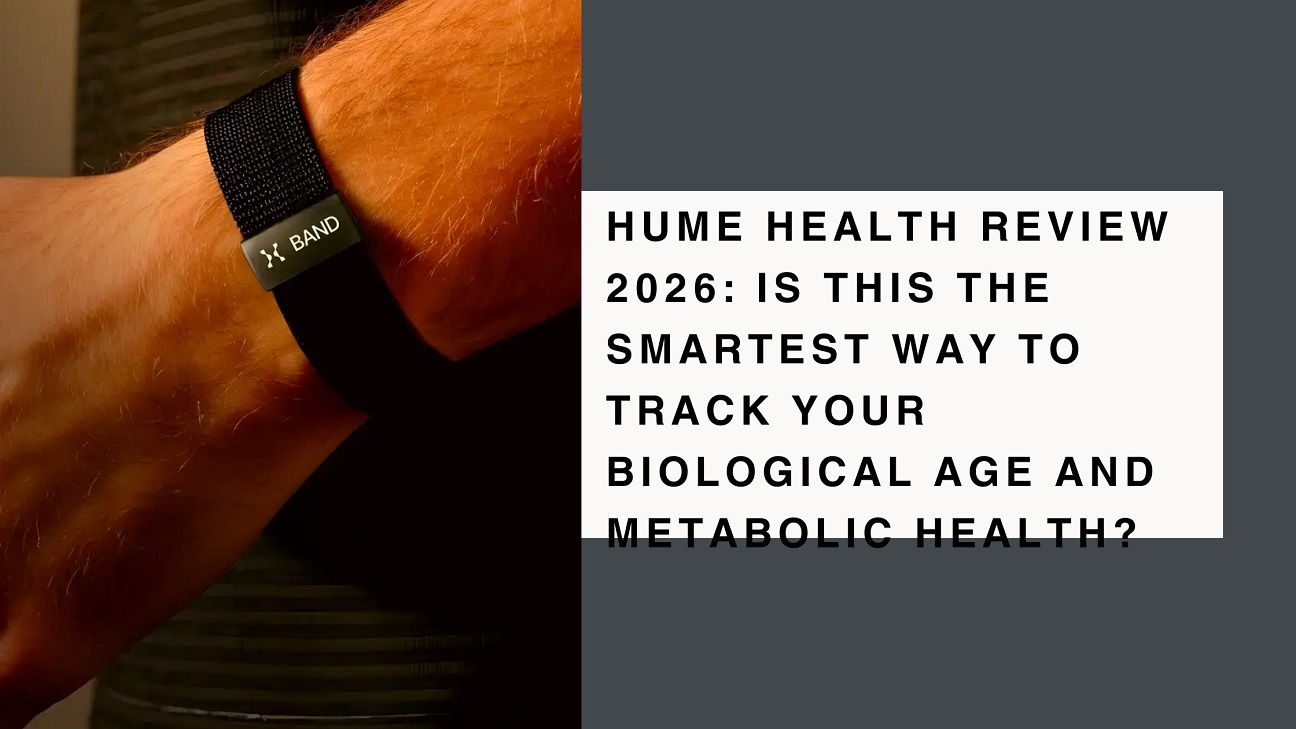
Meta Description: Discover if Hume Health’s Body Pod and Band are worth the hype. Read our in-depth 2026 review covering 45+ metrics, biological age tracking, pricing, and real user experiences.
Introduction: The Day I Realized My Scale Was Lying to Me
Let me paint you a picture. For years, I stepped on that bathroom scale every morning like it was a religious ritual. The number flashed up—sometimes good, sometimes bad—and I let it dictate my mood for the entire day. Sound familiar?
Here’s the thing that finally broke me out of that toxic cycle: two people can weigh exactly the same and have completely different health profiles. One could be carrying dangerous visceral fat around their organs while the other is lean muscle. Yet that little digital display treats them identically.
That’s when I started digging into body composition technology. And that’s when I discovered Hume Health—a company that’s quietly revolutionizing how we understand our bodies by tracking over 45 health metrics instead of just one misleading number.
But is Hume Health actually worth your money? Or is it just another overhyped wellness gadget riding the longevity trend? I spent weeks researching, reading real user experiences, and digging into the science behind their technology. Here’s everything you need to know.
What Is Hume Health? The 30-Second Overview
Founded in 2023, Hume Health is a health technology company on a mission to make advanced health insights accessible to everyone. Instead of fragmenting your health data across multiple apps—one for calories, one for steps, one for sleep—Hume centralizes everything into a single, actionable dashboard.
As Marius Ronnov, Co-Founder and CEO of Hume Health LLC, puts it: “Without the right health data, it’s like looking at your body in black and white. When combined and interpreted correctly, you can see it in full colour.”
The company offers two main products:
- Hume Body Pod – An advanced smart scale that measures over 40 body composition metrics using multi-frequency bioelectrical impedance analysis (BIA) technology
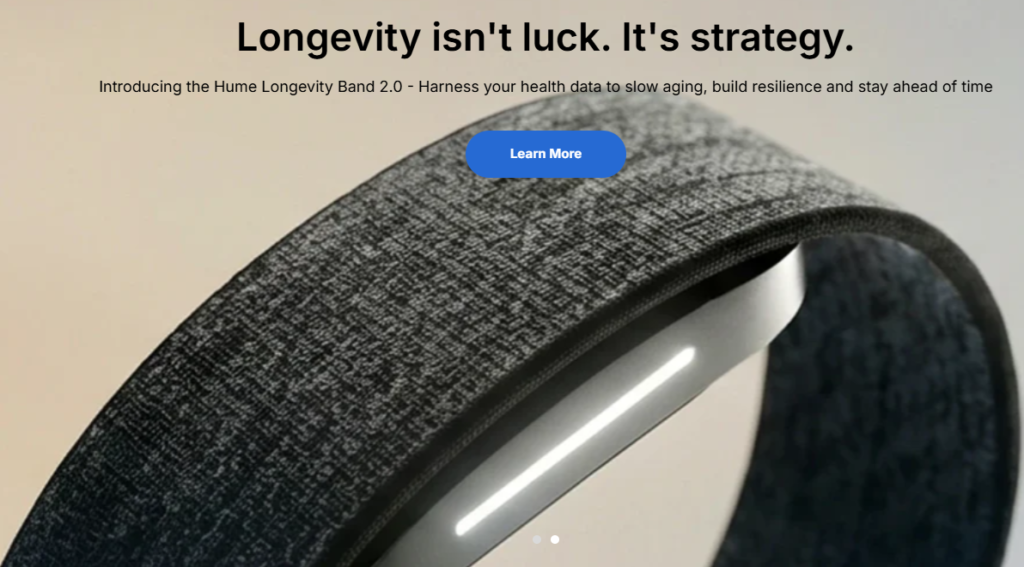
- Hume Band – A wearable health tracker that continuously monitors physiological signals like heart rate variability (HRV), blood oxygen, sleep stages, and skin temperature
Together, they form an ecosystem designed to answer one question: “How is my body really doing?”

The Science Behind Hume Health: How It Actually Works
Multi-Frequency BIA Technology Explained
Let’s get a little technical—but I’ll keep it painless.
The Hume Body Pod uses something called multi-frequency bioelectrical impedance analysis (BIA) . Here’s what that means in plain English:
Your body sends a very small, harmless electrical current through itself. Because muscle holds water and conducts electricity better than fat, the device can estimate:
- Fat mass vs. lean body mass
- Total body water (intracellular and extracellular)
- Segmental muscle distribution (arms, legs, trunk separately)
- Visceral fat levels
The “multi-frequency” part is what makes Hume different from cheaper scales. Lower frequencies travel through extracellular water, while higher frequencies pass through cell membranes. Combining these signals gives a much more accurate picture of your hydration status, recovery patterns, and overall composition.
What About the Hume Band?
The Hume Band takes a different approach. It’s a wearable device designed for continuous monitoring rather than one-off measurements. According to Hume’s 2026 consumer disclosures, it tracks:
- Heart rate variability (HRV)
- Continuous heart rate
- Blood oxygen saturation (SpO2)
- Skin temperature
- Sleep stages (light, deep, REM, awake)
- Activity levels, strain, and recovery status
The band introduces two proprietary concepts that are worth understanding:
Metabolic Capacity – Reflects your body’s ability to perform and recover on a daily basis
Metabolic Momentum – Shows whether your daily choices are compounding toward slower or faster aging
Think of Metabolic Capacity as your current health snapshot and Metabolic Momentum as your health trajectory. One tells you where you are; the other tells you where you’re going.
Hume Health Body Pod: A Deep Dive
What It Measures
The Body Pod tracks over 45 health metrics, including:
| Category | Metrics |
|---|---|
| Body Composition | Body fat %, skeletal muscle mass, lean body mass |
| Fat Analysis | Visceral fat index, segmental fat (arms/legs/trunk) |
| Hydration | Total body water, intracellular water, extracellular water |
| Metabolic | Basal metabolic rate (BMR), metabolic age |
| Bone | Bone mass estimate |
| Heart | Resting heart rate, heart health indicators |
The segmental analysis is a standout feature. Instead of giving you one whole-body number, the Body Pod measures your right arm, left arm, right leg, left leg, and trunk separately. This means you can actually see if you’re building muscle symmetrically or losing fat in specific areas.
Design and Build Quality
Reviewers consistently praise the Body Pod’s build quality. One Wareable reviewer described it as having a “tempered glass surface, sturdy build, and handle attachment [that] give it a professional gym equipment vibe”. It’s designed to look like it belongs in a gym, not a bathroom.
Battery life is another highlight—a single charge can last up to a year. That’s one less thing to worry about.
Price and Subscription
The Body Pod retails starting at $229**. There’s also an optional **Hume Plus subscription at $9.99/month that unlocks personalized nutrition guidance and advanced coaching features.
Compared to clinical-grade body composition analyzers that cost thousands, the Body Pod is positioned as a consumer-friendly alternative that brings professional-level tracking into your home.
Hume Band: Longevity on Your Wrist
What Makes It Different from an Apple Watch?
Let’s be honest—there are a lot of fitness trackers out there. What makes the Hume Band special?
The answer is longevity focus. While most wearables are obsessed with step counts and calories burned, the Hume Band is built around biological age tracking.
According to Hume’s disclosures, the band provides:
- Biological age estimation – A model-based calculation of how your body is aging compared to your chronological age
- Pace of aging – Whether you’re aging faster or slower than expected
- Metabolic Momentum – How your daily habits are compounding over time
The band retails at $199, positioning it as a mid-range option in the wearable market.
Integration with the Hume Ecosystem
One of the smartest things Hume has done is create an integrated ecosystem. The Body Pod and Band sync with the Hume Health app, which also connects to Apple Health, Google Fit, Fitbit, and Garmin.
This means you’re not locked into a closed system. Your data flows where you need it.
What Real Users Are Saying: Hume Health Reviews
The Good
Users consistently praise the depth of data. One reviewer noted that the Body Pod delivers “impressively detailed and accurate body composition data akin to professional medical-grade scans”.
The Hume Band has been well-received too. Wareable included it in their list of best fitness trackers, praising its focus on wellness metrics beyond basic activity tracking.
The Frustrations
It’s not all smooth sailing. Some users report connectivity issues and app frustrations. One reviewer mentioned needing to “open the Hume Health app every time you step on the scales to see all your advanced metrics”—which they found annoying.
Another user complained about inconsistent measurements, with success rates as low as 4 out of 70 attempts in some reported cases.
The app’s user interface has also drawn criticism. One reviewer called it “not intuitive” and said it can be “hard to find and compare each measurement over time”.
The Controversy
It would be irresponsible not to mention this: In January 2026, the UK’s Advertising Standards Authority (ASA) ruled against Hume Health for three paid YouTube ads and one Facebook ad.
The ASA found that the ads:
- Made medical claims for products that weren’t registered as medical devices
- Discouraged essential treatment for conditions requiring medical supervision
- Exaggerated product capabilities
One ad described the Hume Band as “YOUR 2026 STROKE DETECTOR” and referred to “Medical-grade monitoring that catches vascular stress early”. The ASA ruled these claims were misleading.
Takeaway: Hume Health offers valuable tracking tools, but they are wellness devices, not medical devices. They should complement—not replace—professional medical advice.
Hume Health vs. The Competition
Hume Body Pod vs. InBody Dial H30
Both devices measure body composition using BIA technology. However, the InBody Dial H30 leans toward more clinical body composition tracking, while the Hume Health Body Pod is designed for everyday use with app-based tracking and guidance.
The Body Pod also offers better value for the additional metrics it provides compared to competitors like Withings, where you’d need to spend more for advanced measurements.
Hume Band vs. Oura Ring vs. Whoop
All three devices focus on recovery and wellness rather than just fitness. The Hume Band distinguishes itself with its longevity-focused metrics like biological age and Metabolic Momentum.
However, Oura and Whoop have more established track records and larger user communities. Hume is still the newer player in this space.
Key Insights: What You Need to Know Before Buying
- Hume Health is not a medical device. It’s a wellness tool that provides valuable insights but should not replace professional medical advice.
- The Body Pod tracks over 45 metrics. That’s significantly more than a standard smart scale, which typically only shows weight and body fat percentage.
- Segmental analysis is a game-changer. Measuring arms, legs, and trunk separately gives you a much clearer picture of where you’re gaining muscle or losing fat.
- The Hume Band focuses on longevity. If you care about biological age and metabolic health rather than just steps, this is worth considering.
- The app experience is mixed. Some users love it; others find it frustrating and non-intuitive.
- Expect some measurement inconsistency. Like all consumer-grade BIA devices, the Body Pod is best used for tracking long-term trends rather than obsessing over single readings.
- Check your expectations. This is a $229-$400 investment depending on which product you choose. It’s not cheap, but it’s significantly less expensive than clinical-grade alternatives.
Frequently Asked Questions
1. What is Hume Health and how does it work?
Hume Health is a health technology company founded in 2023 that offers two main products: the Hume Body Pod (a smart body composition scale) and the Hume Band (a wearable health tracker). The Body Pod uses multi-frequency bioelectrical impedance analysis (BIA) to measure over 45 health metrics including body fat, muscle mass, visceral fat, and metabolic age. The Band continuously monitors physiological signals like heart rate variability, blood oxygen, sleep stages, and skin temperature.
2. How much does Hume Health cost?
The Hume Body Pod starts at $229, while the Hume Band retails at $199. There’s also an optional Hume Plus subscription at $9.99/month that unlocks personalized nutrition guidance and advanced coaching features.
3. Is Hume Health accurate?
Hume Health devices provide valuable trend data rather than clinically perfect single measurements. Some users have reported that lean mass readings tend to slightly over-estimate compared to DEXA scans, while fat mass readings sometimes under-estimate. The devices are best used for tracking changes over time rather than obsessing over individual readings.
4. Is Hume Health FDA approved or a medical device?
No. Hume Health products are wellness devices, not medical devices. They are not FDA approved for diagnostic purposes. The UK’s Advertising Standards Authority ruled against Hume in 2026 for making medical claims that weren’t justified.
5. What is metabolic age and how does Hume Health calculate it?
Metabolic age is an estimate of your biological age based on your basal metabolic rate (BMR) compared to the average BMR for your chronological age group. Hume Health calculates this using proprietary algorithms based on the data collected from the Body Pod and Band, including body composition, heart rate variability, and other physiological metrics.
6. Can I use Hume Health without a subscription?
Yes. The Body Pod and Band both work without a subscription. The optional Hume Plus subscription ($9.99/month) adds personalized nutrition guidance, coaching, and advanced insights.
7. Does Hume Health work with Apple Health and Google Fit?
Yes. Both the Body Pod and Band sync with the Hume Health app, which integrates with Apple Health, Google Fit, Fitbit, and Garmin.
8. What’s the difference between Hume Body Pod and Hume Band?
The Body Pod is a smart scale that provides snapshot measurements of over 45 body composition metrics when you step on it. The Band is a wearable device that continuously monitors physiological signals throughout the day. They work best together as an integrated ecosystem.
9. Is Hume Health a scam?
No, Hume Health is a legitimate company with real products that deliver valuable health insights. However, some of their past marketing claims have been deemed misleading by advertising regulators. The products are useful wellness tools but should not be treated as medical devices.
10. How long does the Hume Body Pod battery last?
According to Hume, a single charge can last up to one year. The device uses minimal power since most people only step on it once a day.
Final Verdict: Is Hume Health Worth It?
Here’s the honest truth: Hume Health is not for everyone.
If you just want to know your weight and maybe your body fat percentage, there are cheaper options out there. Save your money.
But if you’re someone who:
- Takes their health seriously
- Wants to understand their body on a deeper level
- Is interested in longevity and metabolic health
- Enjoys tracking data and spotting trends
- Can tolerate some app quirks for the sake of deeper insights
…then Hume Health is absolutely worth considering.
The Body Pod, in particular, brings professional-level body composition analysis into your home at a fraction of the clinical cost. The segmental analysis alone makes it more useful than 90% of smart scales on the market.
The Band is a solid option if you’re looking for a wearable focused on recovery and longevity rather than just fitness. Just remember that biological age estimation is exactly that—an estimation—not a medical diagnosis.
My recommendation: Start with the Body Pod. It gives you the most comprehensive data for the money. If you love the ecosystem and want continuous tracking, add the Band later.





Leave feedback about this